Level the boat fore and aft and etch a waterline with a laser level. Apply bottom paint below this line.
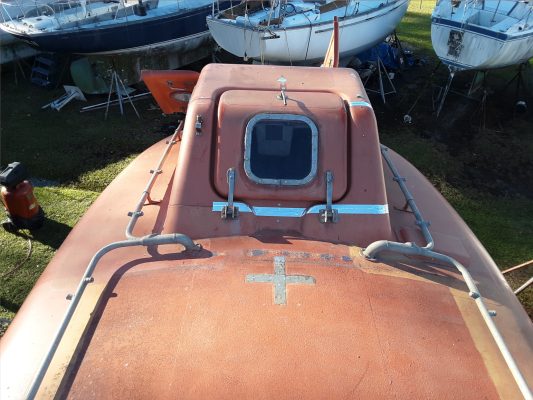
There was a diaphragm that told the lifting cables when to release the hooks. It sensed water pressure when the boat landed in the water and was a safety feature. I have removed the hardware and the opening needs to be glassed over or custom fitted for a thru-hull that could be used for the grey tank overboard valve.
Glass and fair the gash on the portside. It’s above the waterline.
Hydraulic steering works but should have a fluid change and any other servicing.
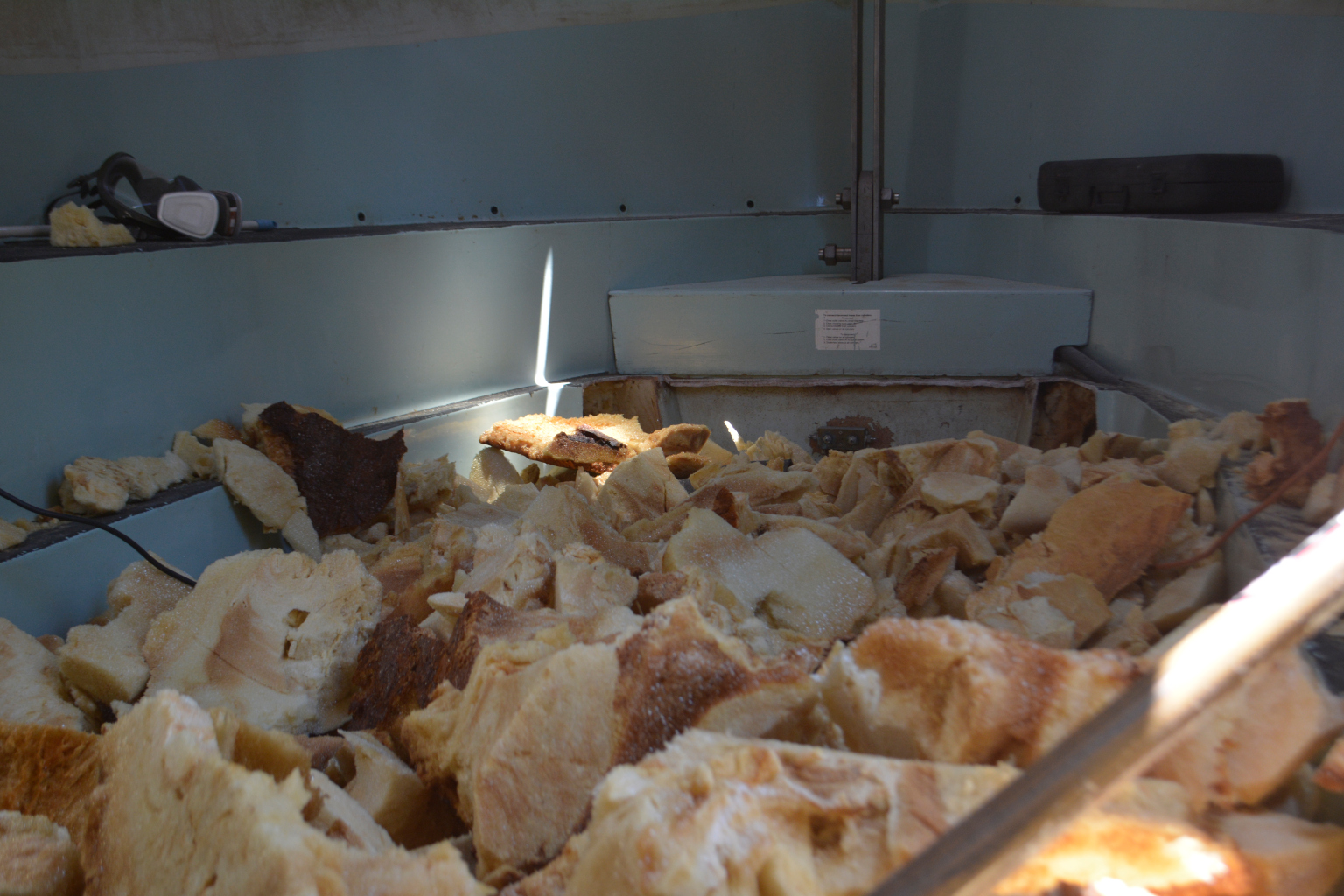
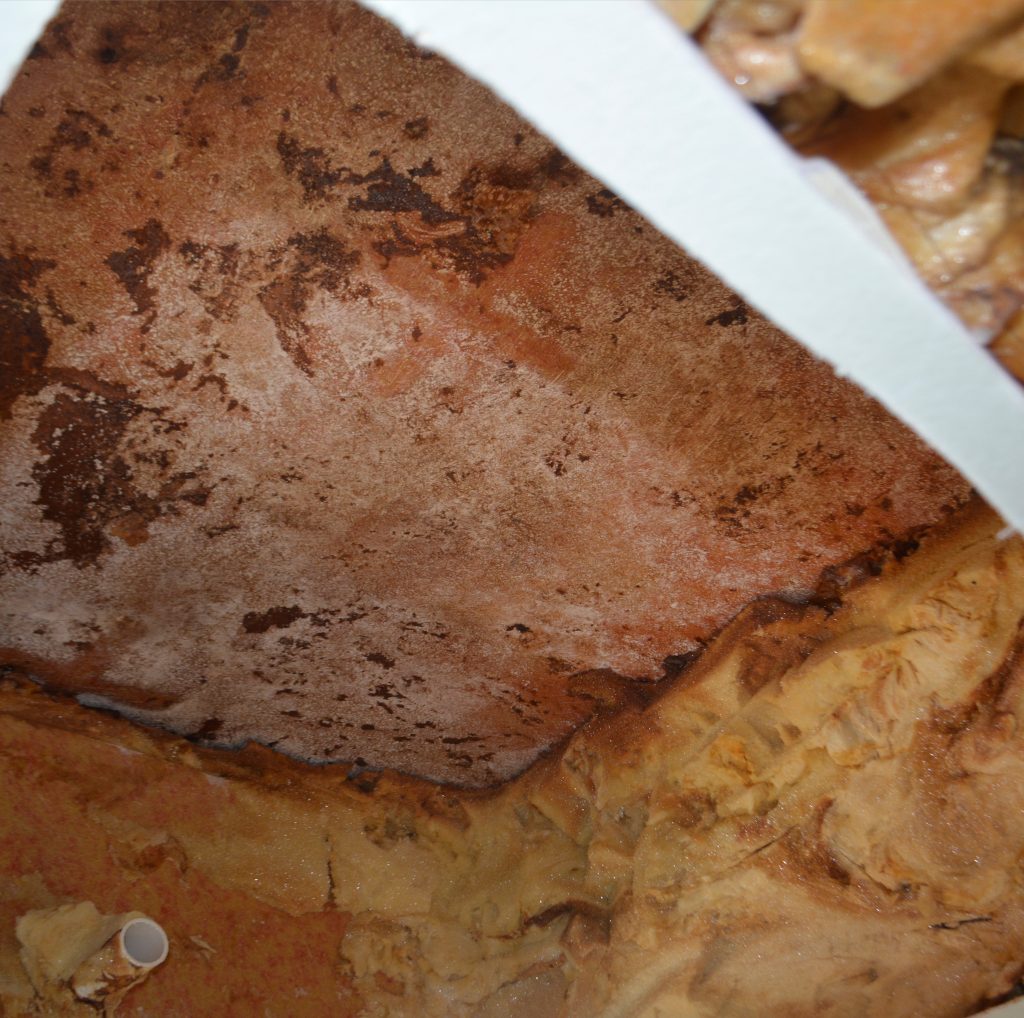
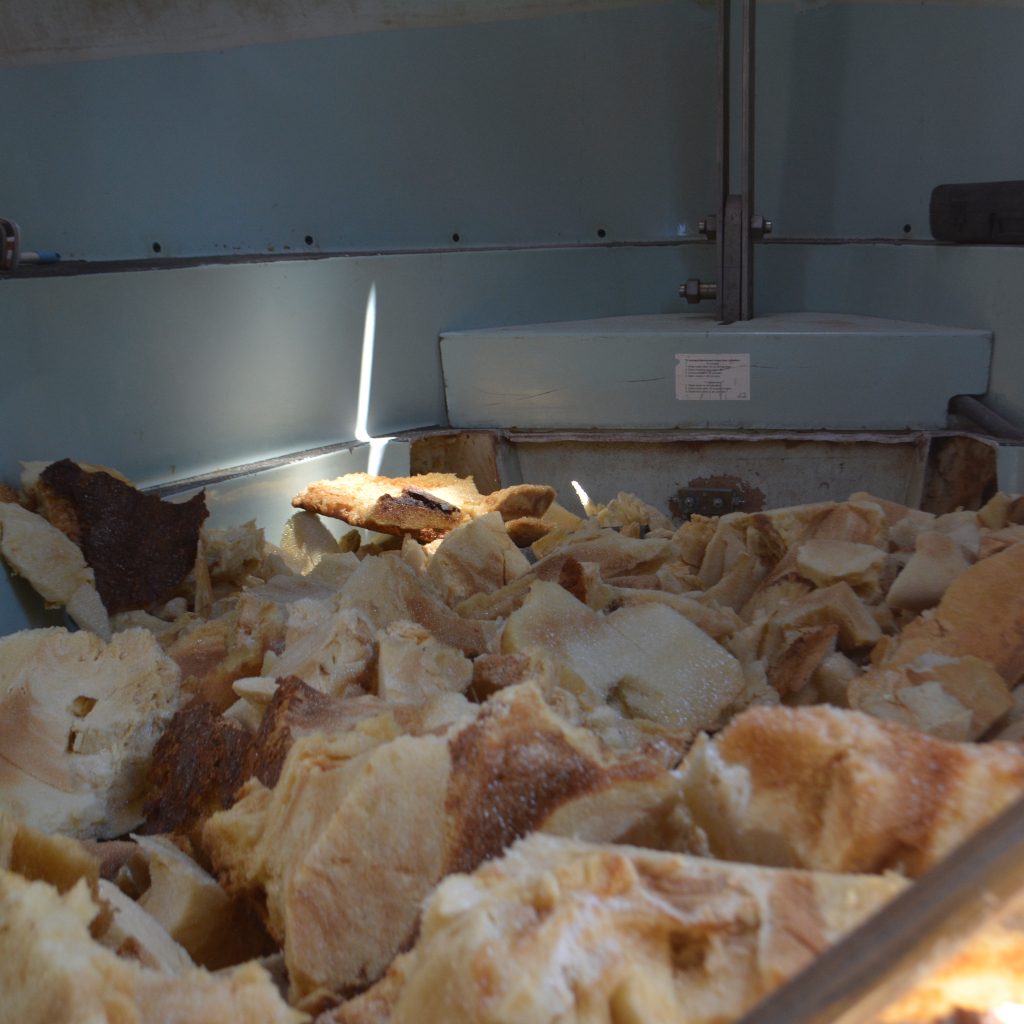
There is about 26 inches of foam that makes up the upper shell of the lifeboat. This was enough floatation to keep the boat from sinking even if it was totally flooded and 69 passengers were huddled up on top. You first have to cut through 1/8″ of solid fiberglass to expose the foam. It’s the hardest job of the conversion. One overhead chamber just filled 12 commercial trash bags. Some of the foam has been wet and smelly. The brackets for the sprinkler system are attached by rivets and are all leaking. Exposing the outer shell lets you install MaxAIR fans and brackets for solar panels. The headroom goes from 5′ 10″ to over 7′ so you can build storage into the floor. Another benefit is the moving of weight lower. 69 passengers was a lot of ballast. Maybe 12,000 pounds worth supplying a good amount of stability.
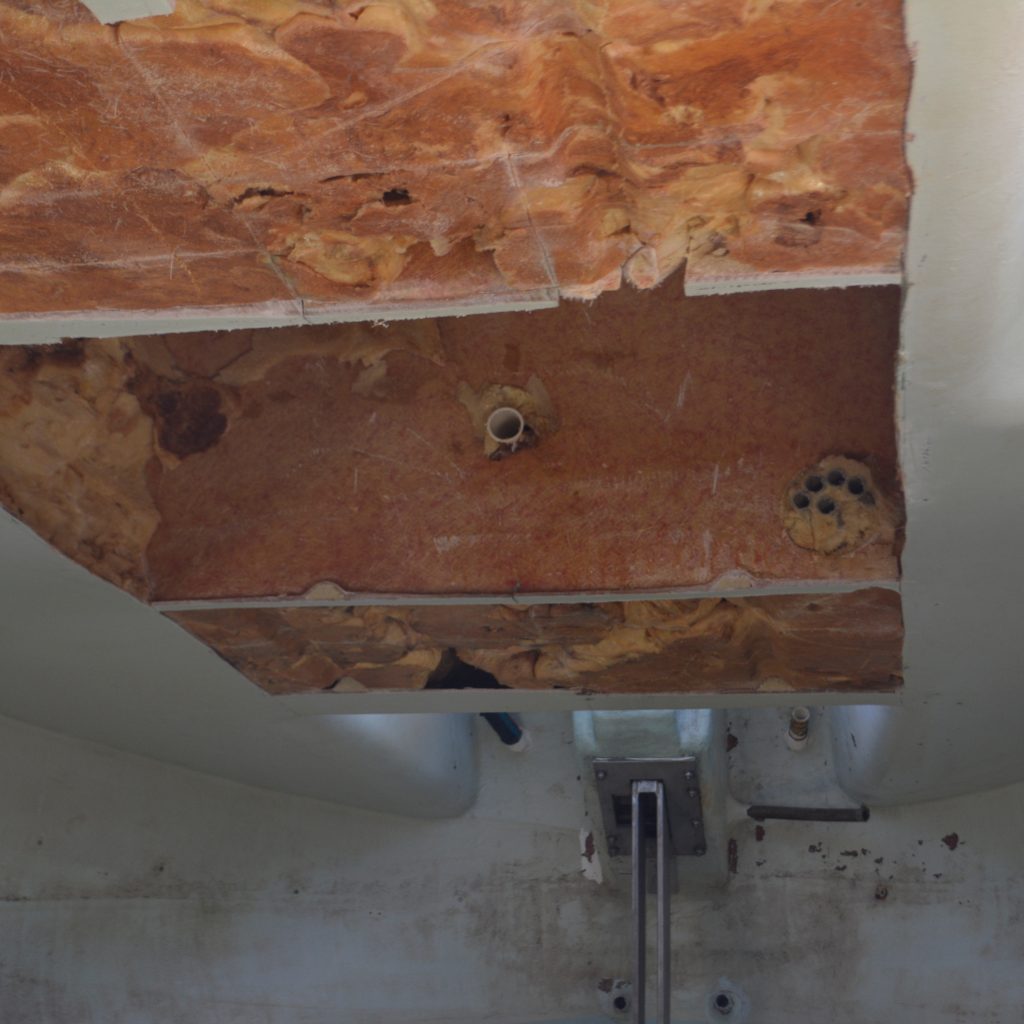
This is the underside of the outer shell.